Asphalt Overlay in Cincinnati
An asphalt overlay is one of the most cost-effective ways to restore a worn driveway or parking lot without the expense of a full tearout. Roberts Paving provides professional asphalt overlay services throughout Cincinnati including Highland County, Clermont County, Brown County, Adams County, and Clinton County. When the base is still structurally sound but the surface has deteriorated from traffic and weathering, a properly installed asphalt overlay gives you a fresh, smooth surface and adds years of life to your pavement at a fraction of full replacement cost.
Our Asphalt Overlay Process

Surface Evaluation
We inspect the existing pavement to confirm the base is structurally sound and that an overlay will perform well. If the base has failed, we tell you before any work begins.

Crack Repair and Prep
All existing cracks are cleaned and sealed. The surface is swept thoroughly and any areas of localized failure are patched so the overlay has a stable, uniform surface to bond to.

Tack Coat and Paving
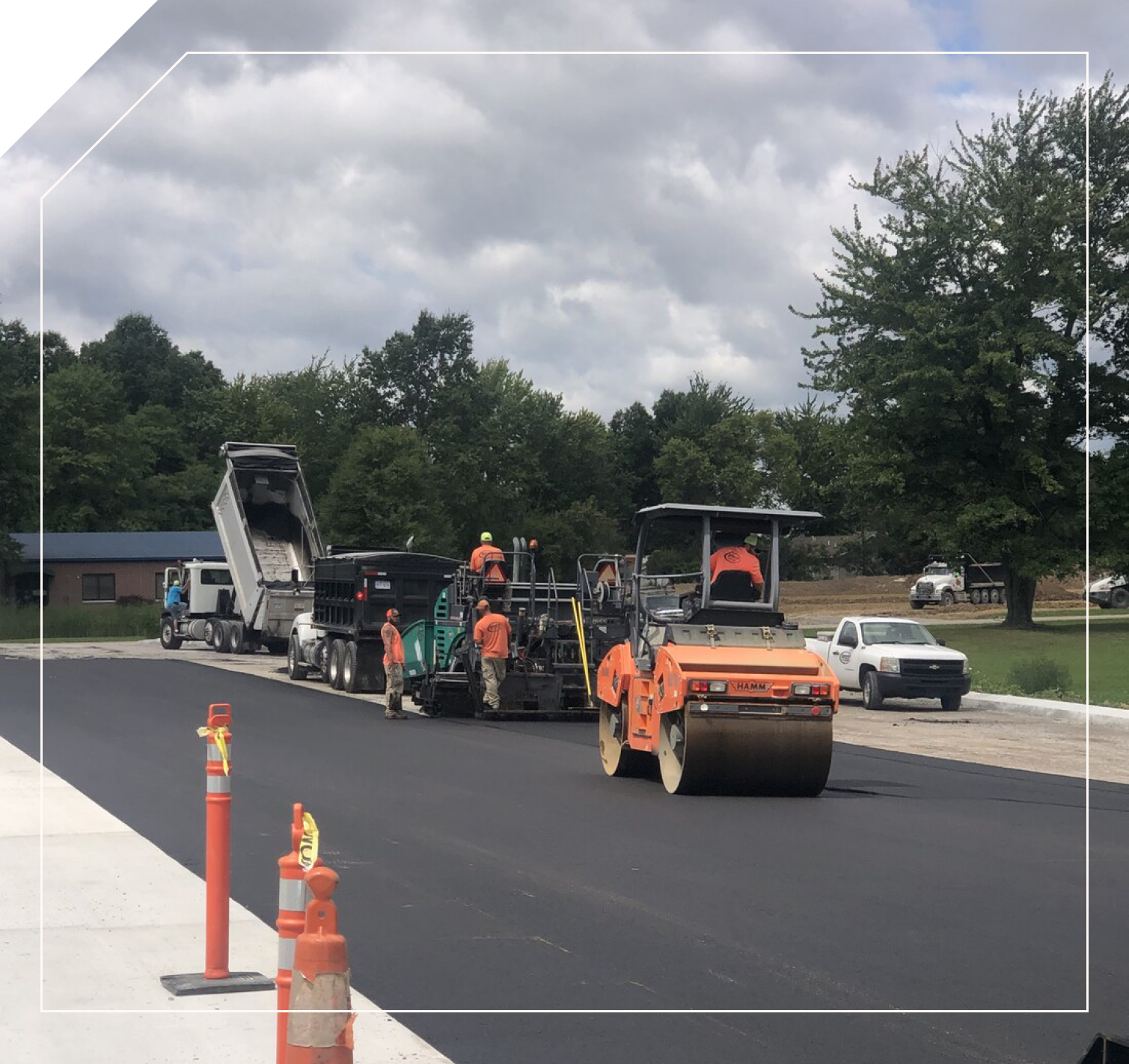
A bonding tack coat is applied to the entire surface, then hot-mix asphalt is laid at the correct thickness using commercial paving equipment and compacted to specification.

Final Compaction and Grading
Final roller passes ensure a smooth, dense surface with proper drainage grades. We verify transitions at curbs, drains, and building entries are clean and functional.
An overlay is only as good as the preparation beneath it. We follow a proven process to ensure the new surface bonds correctly and delivers years of service.
Why Cincinnati Property Owners Choose Roberts Paving for Asphalt Overlay
Roberts Paving does not recommend an asphalt overlay when the base has failed underneath. That would only delay an inevitable replacement and waste your money. But when conditions are right, an overlay is the smart, economical choice and we execute it correctly. We prepare the existing surface properly, apply the right asphalt mix at the appropriate thickness, and compact it for a result that holds up through Ohio winters. Over 32 years in Cincinnati, we have learned exactly when an overlay is the answer and when something more comprehensive is required.

We pave driveways, parking lots, and roads throughout Hillsboro, Cincinnati, Batavia, Wilmington, Georgetown, Mt. Orab, Blanchester, Milford, Loveland, and the surrounding communities. If you’re in Cincinnati, we can help.
- Hillsboro
- Cincinnati
- Batavia
- Wilmington
- Georgetown
Frequently Asked Questions
How thick is a typical asphalt overlay?
Most asphalt overlays are applied at one and a half to two inches of compacted asphalt. The appropriate thickness for your project depends on the current condition of the existing surface and the traffic load the pavement will carry after installation.
What is the difference between an asphalt overlay and a mill-and-overlay?
A standard asphalt overlay places new asphalt directly over the existing surface. A mill-and-overlay first uses asphalt milling to grind down the existing surface and restore proper elevations before the new asphalt is applied. Mill-and-overlay is used when a simple overlay would create height problems at curbs, drains, or building thresholds.
How long does an asphalt overlay last?
A properly installed asphalt overlay can add 10 to 15 years of service life to your pavement. Applying sealcoating after installation and addressing cracks promptly will extend that further and protect your investment from Ohio’s weather.
Can an overlay be applied over an existing overlay?
In some cases, yes, but there are limits to how many layers can be stacked before elevation issues arise at curbs, drains, and building entries. If the existing surface already has multiple layers, we may recommend milling first to restore proper elevations before applying the new overlay.
Is an asphalt overlay cheaper than full replacement?
Yes, typically by a significant margin. An overlay eliminates the cost of excavation and base reconstruction. When conditions are right for an overlay, it is one of the most cost-effective ways to restore a worn pavement surface and add years of service life.
Will an asphalt overlay fix drainage problems?
A standard overlay follows the existing grade, so it will not correct drainage issues on its own. If drainage correction is needed, we may recommend a mill-and-overlay approach where we adjust grades during the milling phase before applying the new surface.